If you’ve ever followed a training plan — whether it came from TrainingPeaks, a book, or a coach who writes blocks for 20 athletes at once — you’ll recognise the feeling. Tuesday says “3×12 minutes at threshold.” Tuesday you also slept five hours, had a stressful morning, and your legs feel like concrete.
You do the session anyway, because the plan says so. You grind through it below target. You’re frustrated. The data looks worse than last week.
This is not a you problem. It’s a fundamental flaw in how static training plans work.
The Problem With Pre-Written Plans
A training plan is written in advance. It assumes a version of you that performs consistently, recovers predictably, and exists in a stable life context. None of those assumptions are reliably true.
The plan doesn’t know:
- That you had a terrible night’s sleep
- That you’re coming off a heavy work week
- That your legs are fresher than expected because you were sick and rested
- That the 3×12 prescribed two months ago was right for who you were then, not who you are now
The best human coaches adapt plans weekly based on check-ins, subjective feel, and performance data. But that level of attention costs money, scales to a handful of athletes, and still happens after the ride — not during it.
What Real-Time AI Coaching Changes
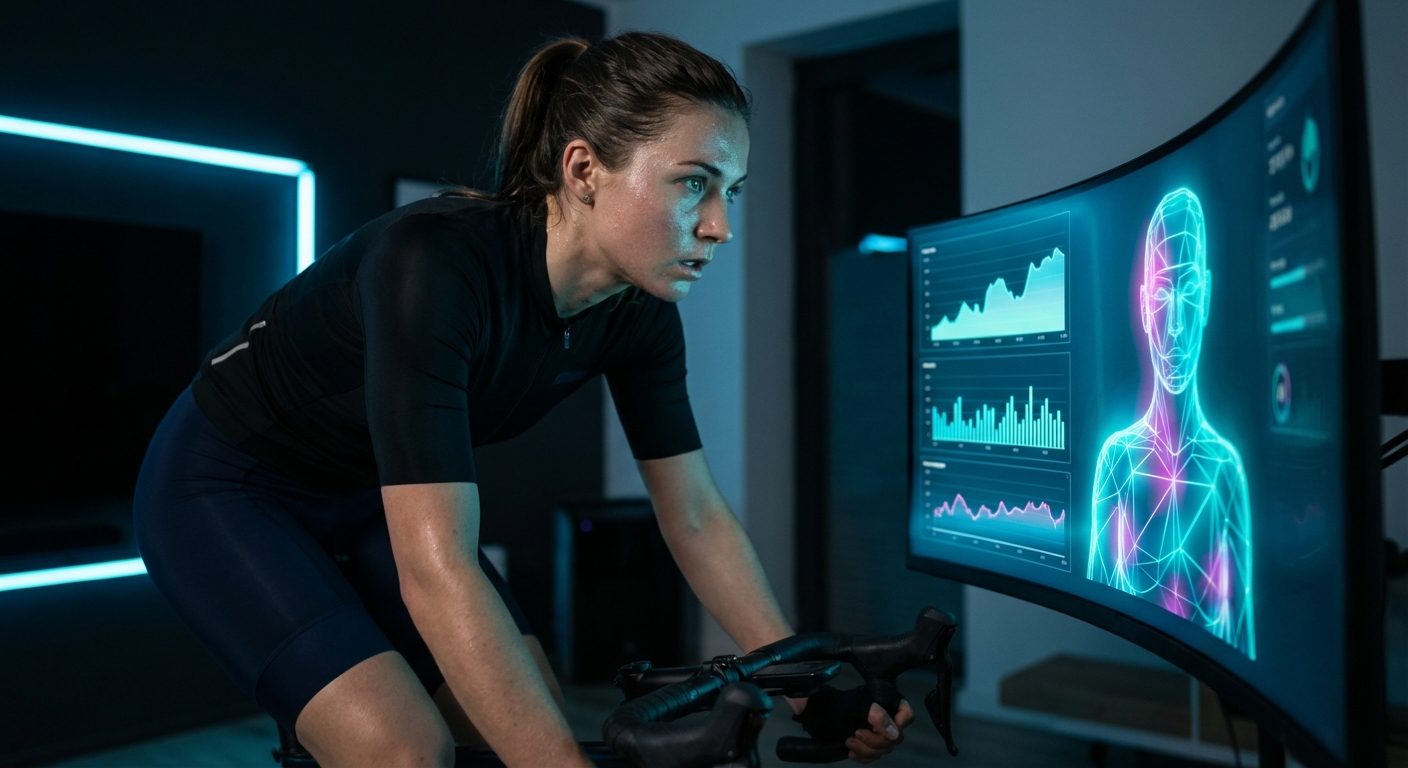
PeakPulse doesn’t write you a plan for Tuesday. Instead, it reads what’s actually happening during your ride and responds to that.
Every 30 to 90 seconds, your AI coach is evaluating your power output against your FTP zones, your heart rate against your training history, and your cadence against your typical ranges. If you’re drifting below target on a threshold effort, the coach says something. If you’re pushing too hard too early in an endurance ride, the coach says something. If you’re nailing it, the coach acknowledges that too.
This isn’t gamification. It’s the closest thing to having a knowledgeable coach in the room with you.
The Three Coaching Personalities
PeakPulse offers three distinct coaching styles, because different athletes want different things from a coach.
Motivational — This coach reads your effort and meets you emotionally. If you’re fading, it pushes you. If you hold a hard effort, it celebrates. The feedback is human in tone, calibrated to keep you engaged and working at the right intensity.
Technical — Pure information. Zone cues, cadence corrections, power targets. No motivation, no cheerleading — just clean, precise coaching for athletes who find emotion distracting and data clarifying.
Minimal — Silence as the default, with intervention only when something important needs your attention. For riders who want to be in their own headspace and trust themselves to execute.
You can switch coaching style between rides. Some athletes use Technical on hard days and Minimal on recovery rides. Others flip between all three depending on mood.
But I Still Need Structure
This is a fair objection. Randomised effort isn’t training — you still need periodisation, progressive overload, and planned recovery.
PeakPulse doesn’t replace that macro-level structure. It operates at the micro level: within a session, it keeps you honest about effort. At the macro level, your Training Load dashboard (CTL, ATL, TSB) shows you whether you’re building fitness or digging yourself into a hole — and your Daily Readiness Score tells you each morning whether your body is ready for hard work or needs another easy day.
The combination of in-ride coaching and recovery-aware metrics means you’re no longer training blind. The plan you follow (from any source) becomes more effective because your execution of each session is smarter.
PeakPulse is currently in early access. If you want to be one of the first athletes to train with an AI coach who adapts in real time, join the waitlist.